Triptych
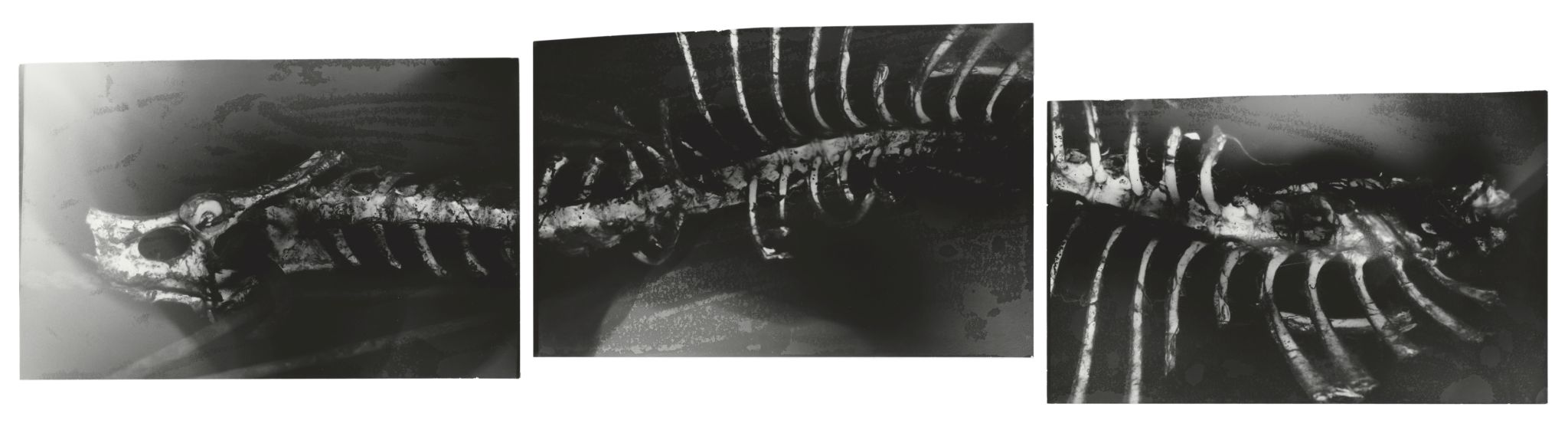
Explosurists engage in a wet-darkroom ritual characterized by experimentation
and transformation. Heat, pressure, shock, and light are harnessed to blast an
image onto the light-sensitive paper. What remains is not simply a record of the
original, but an imprint of the experience.
Uncertainty is central to
the work. We can construct the conditions of an explosure, but we cannot
completely predict its outcome. The resulting print carries the evidence of
those ambiguities in its density, its interruptions, its shadows, and its
unexpected details.
The source negative becomes both subject and
material as it is manipulated, damaged, and progressively consumed. A
combustograph exists only once. Even when the same materials, sequence, and
intentions are brought together again, the moment cannot be repeated.
The
image is therefore less a reproduction than a remainder — the artifact left
behind when a photograph has endured this moment of creation.


Some works are made independently, while others are collaborations in which attribution is deliberately uncertain. In each case, the finished print is treated as an individual object with a physical memory rather than a mechanical fabrication or standardized procedure.
Interactive layers of input are positioned and conducted through a sequence of stages, whereby the traditional negative is superseded by the darkroom environment itself. The explosure is then initiated by force and combustion.
Assembled components are permenantly altered, ensuring that each iteration will be unique. Irregular forms and solarizations appear where none were anticipated. Areas of the image can be illuminated by brilliant smudges of darkness or disappear under an interplay of conflicting light bursts.
Chemistry reveals the latent image, and prints are stabilized — in both a literal and a figurative sense — by being fixed, toned, and washed for archival permanence.